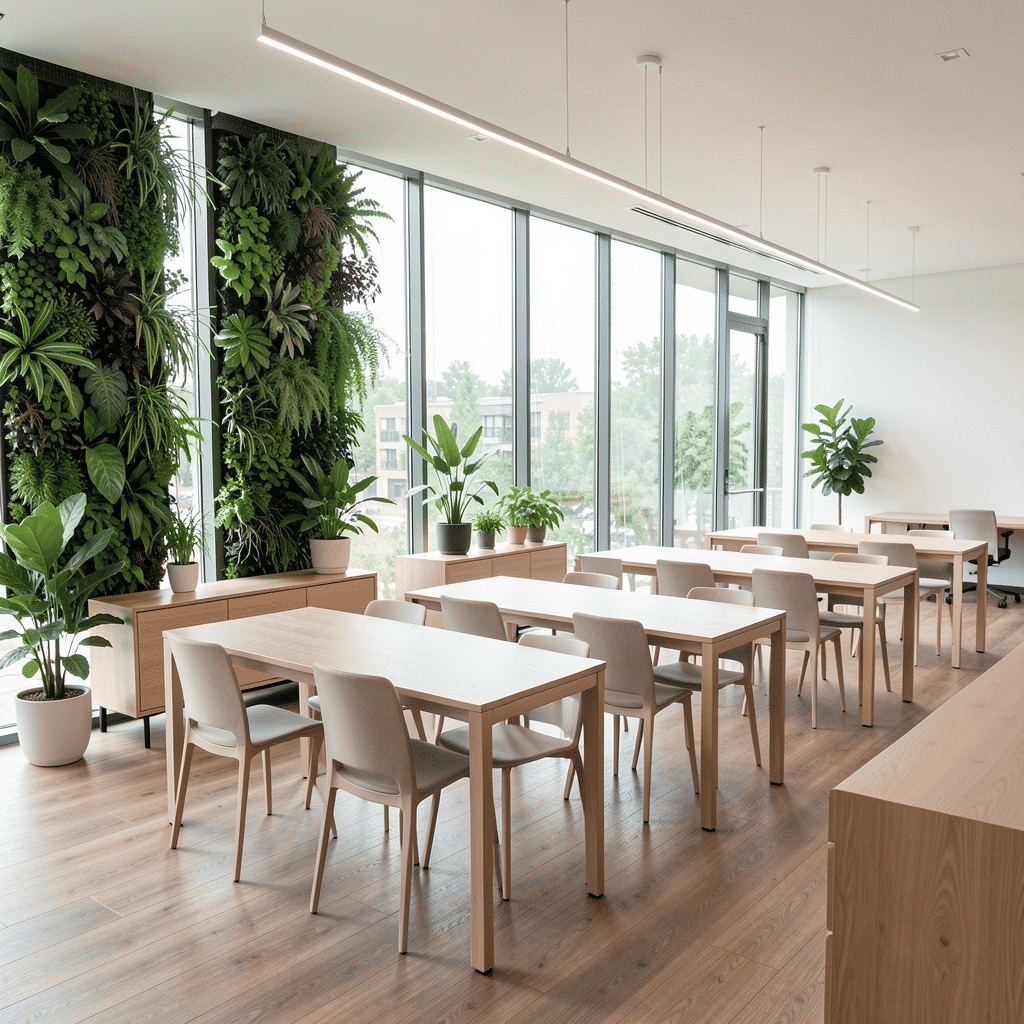
In recent years, urban spaces have increasingly embraced biophilic design, a concept that seeks to reconnect people with nature in built environments. By integrating natural elements into the design of indoor spaces, biophilic design enhances the well-being of occupants, fosters creativity, and elevates aesthetics in urban settings.
One of the primary benefits of biophilic design is its positive impact on mental health. Exposure to nature has been proven to reduce stress, boost mood, and improve focus. By incorporating natural elements such as indoor plants, water features, and natural light, indoor spaces can replicate some of the calming effects typically found in outdoor environments. For instance, offices and homes with abundant green plants and access to natural light can create a more serene atmosphere, promoting increased productivity and emotional well-being.
Biophilic design also plays a significant role in improving physical health. Indoor air quality can be enhanced by using plants known for their air purifying qualities, such as spider plants, snake plants, and peace lilies. These plants help filter toxins from the air, providing a cleaner and healthier environment for residents and workers alike. Moreover, designs that encourage natural airflow and ventilation can reduce reliance on artificial cooling systems, leading to energy savings as well as improved air quality.
On the aesthetic front, biophilic design infuses indoor spaces with organic beauty. Natural materials like wood, stone, and living walls introduce textures and patterns that soothe the senses and offer visual intrigue. Moreover, nature-inspired artwork and earthy color palettes can evoke a sense of harmony and balance. By creating spaces that reflect the beauty of the outdoors, urban environments become more inviting and less sterile, counteracting the impersonal nature of modern cityscapes.
Biophilic design is not limited to incorporating plants and natural materials but extends to mimicking natural forms and processes. Curved shapes, fractal designs, and patterns found in nature can be incorporated into architecture and décor, offering additional psychological benefits linked to our evolutionary affinity for the natural world. Spaces designed with nature’s complexities in mind encourage exploration and curiosity, fostering environments conducive to innovative thinking.
In urban spaces, where concrete, glass, and steel often dominate, biophilic design offers a refreshing alternative that enhances quality of life. Whether through the strategic placement of vegetation, utilization of natural light, or incorporation of nature-derived patterns, biophilic design bridges the gap between nature and urban living. By bringing elements of the outdoors inside, communities can enjoy the benefits of a healthier, more aesthetically pleasing, and sustainable living environment. As more cities and developers adopt this approach, the vision of harmonious urban living with nature becomes an achievable reality.